


What To Look For When Buying A Used Boat
#Ft. Printable checklist for used boats
With a recent surge in the used boat market, Horizon is here to help you on your journey to finding the perfect used boat. A great start point is to find a legitimate, trustworthy dealership. Private sales may save you some cash, but a dealership can conduct the relevant background checks on sellers, take care of the exchange process, contracts and legal fees and processes, making the transaction a much smoother process.
Once you’ve found a boat you like, with a dealership you can trust, it’s time to book a viewing. Once you’re at the viewing, here’s a few things to look out for on a used boat:
1. Any evidence of stress, dents, or scratches to the hull:
It’s also worth asking when the hull was last anti-fouled and check for a chalk-like appearance to the gel coating if you’re looking at a fiberglass boat. This can indicate the hull has been neglected from irregular washing or using the wrong products to clean the hull. This leaves the boat more susceptible to damage, therefore reducing its lifespan and aesthetic appearance.
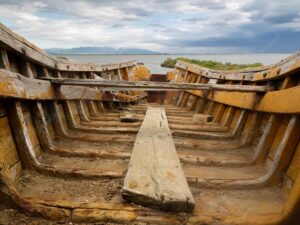
2. Check the deck for any indication of rot, cracks, or holes.
Damage like this can lead to more severe issues, such as internal water damage to the foam or balsa cores within the boat, reducing its structural integrity.
3. Ask to do a test run of the boat’s engine.
You can do this by running the engine at full throttle for around 10 seconds. If the engine sounds rough, looks loose, or begins to smoke, these are all red flags. You can also check under the engine cover for any signs of corrosion, frayed wires, cracks and check the belts and hoses for any damage. It’s also worth asking when the engine was last serviced, and the oil changed. You can test the engine oil yourself, sampling it by rubbing it between your fingers. It shouldn’t feel gritty or contain any metal dust or moisture. If you are looking at purchasing a larger vessel, it may be worth investing in a boat mechanic to check the engine over before you go through with a sale.
4. Look at the battery and find out how old it is.
Batteries usually last around 5 years. Things to look out for would be corrosion, cracks to its casing or leaks. Make sure the battery is also secure in its tray.
5. Ensure the starter motor is in good condition and is free from corrosion.
If the starter motor is clanging, grinding, or making an excessively loud whizzing/spinning sound, there may be issues here.
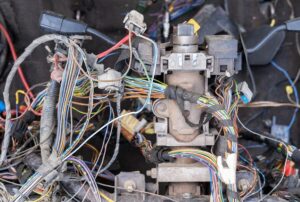
6. Take a look at the electronic components of the boat too!
Such as the radio, GPS, radar, lights, electronic shifter and throttle. Where you can, inspect any wires for damage, melted insulation or corroded wiring connections.
7.Assess the bellows for any visible damage, rust, or loose clamps.
If they are damaged, this can lead to major problems further down the line as the engine can become compromised by water.
8. Inspect the Interior.
Make sure any hardware is secure and the upholstery is free of mold and mildew. Loose furniture can indicate more alarming, underlying issues such as rot. Make sure to check any hatches, windows, or canopies for breaches as this can allow moisture into your boat and cause mold and rot to form later down the line.
9. Ask when the anodes were last replaced.
Your anodes are essential in the protection of your propeller blades. Also, check the propeller blades for any pink-ish discoloration, which may indicate electrolytic decay.
10. Examine the keel and rudder for damage.
Specifically the leading and trailing edges.
11. Is there any play in the steering?
You can assess this by taking a look at the rudder bearings, linkages and wires for wear and slack.
12. Lastly, check the bilge.
This area is often neglected in terms of maintenance as it is used for storage. Check for any leaks in this area as this can lead to your bilge pumps becoming clogged.

For smaller boats that come with a trailer, make sure to inspect the frame for rust, rot, and other damage. It’s also important to check the suspension, braking systems, tires, and electrical components. If possible, look under the wheel bearing grease caps for a silver or white milky grease. This can indicate damage to the bearings or water intrusion to the bearing hubs.
Other important questions to assess the quality of a boat would be:
- Has the boat been used on fresh or salt water? Salt water is much less kind to your boat and will degrade the boat quicker and reduce its value.
- When was the last time the boat was lifted and what were the state of the stern drives and hull at that time?
- Where has the boat been stored? If it has been stored outside and left to the elements, it may not be in as good condition as one stored inside.
- Why have the sellers decided to put the boat on the market?
- Have there been any major issues with the boat in recent years?
- How often has the boat been serviced?
- How many hours are on the engine? – Although this is not always the best indicator of the condition of the boat. A boat with more miles may be extremely well cared for, while another boat with much fewer miles, may have been neglected and have fallen into disrepair.
- Do you have the service history and relevant paperwork? Specifically ask for the boat title documents (such as bills of sale and transfer of legal title), boat registration certificates, original VAT invoice and builders’ certificate, which should include the hull ID number and the year the boat was built.
Now you’ve filled out your checklist and found your dream boat and it’s passed all your checks. We recommend to always employ an independent marine surveyor to assess the boat thoroughly before the purchase is completed.
When you buy with Horizon, we’re always there to lean on after the purchase has been made. Should you come across any teething issues with your boat and are stuck for where to turn, we’re only a phone call away for any advice or help finding a trusted contractor for any repairs/maintenance.
